
Key Takeaways
- A union apprenticeship is paid job training run through a local union’s training program, usually two to five years long.
- Pick your trade first, then find the local union that trains it.
- Most programs ask for a diploma or GED, a test, and a minimum age. Rules vary by program.
- Application windows can be monthly, yearly, or only a few weeks, so check dates early.
- A pre-apprenticeship like ACCESS FOR ALL in Benton Harbor can help you meet entry rules and get ready to apply.
A union for apprenticeship usually means a building trades union that runs a registered apprenticeship with employers. You work, earn a paycheck, and take classes to learn a trade. When you finish, you earn a credential that is recognized across the country. This guide explains how these programs work, what they ask for, and how to apply in Michigan. It also shows where Berrien County residents can get free help getting ready.

How Does a Union for Apprenticeship Work?
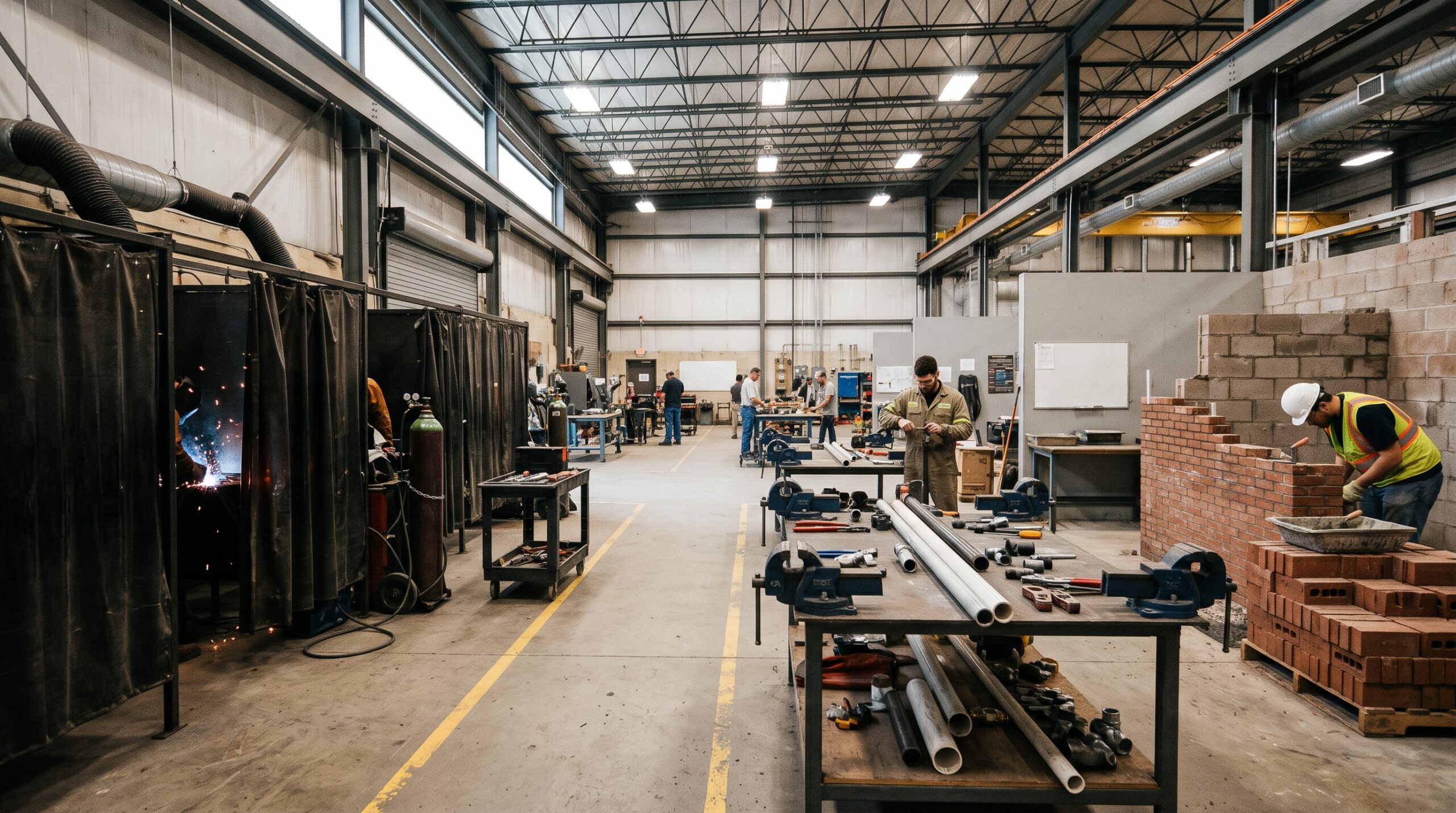
A union apprenticeship is paid job training through a local union. Many programs are run by a Joint Apprenticeship Training Committee (JATC) or a union training center. You learn on the job with a mentor. You also learn in a classroom.
Apprenticeship.gov says apprentices get a competitive wage from day one, with raises as their skills grow. A Massachusetts state guide says most programs last two to five years. The same guide says apprentices get at least 125 hours of classroom time each year. It also says they typically start near 50% of a journey-level worker’s wage, with raises of 10% to 15% a year. Pay and length differ by trade and local, so ask each program for its numbers.
Which Union for Apprenticeship Should You Choose?
Pick your trade first, then find the local union that trains it. Michigan’s College Credit for Apprenticeships Program works with 12 skilled building trade unions, so you have many choices. One example is Operating Engineers Local 324 in Howell, Michigan.
Think about what fits you best. Ask yourself if you like working outdoors, using tools, working with electricity, or working at heights. Also think about the physical demands and how long you can train before you work full time.
Here are example program lengths from a Massachusetts guide. Michigan locals set their own rules, so treat these as a rough guide.
| Trade | Example program length |
|---|---|
| Laborers | 2 to 3 years |
| Ironworkers | 3 years |
| Roofers | 3 years |
| Electrical workers | 5 years, with 900 to 1,050 classroom hours |
| Plumbers and pipefitters | 5 years, with 1,230 classroom hours |
The same guide also lists carpenters, bricklayers, millwrights, painters, sheet metal workers, and more. Ask which local covers Berrien County for the trade you like.

What Do Union Apprenticeship Programs Usually Require?
Requirements vary, but most programs ask for a minimum age, a diploma or GED, and a test. A Massachusetts guide lists these common rules.
- Age: 18 or older, though some programs accept 17-year-olds.
- Education: A high school diploma or GED.
- Driving: A valid driver’s license, which many programs require.
- Health and fitness: A drug test and the physical ability to do the work.
- Work status: Authorization to work in the United States.
- Testing: An aptitude test, often in math and reading, with a minimum score.
Some programs also hold an interview. Several trades want one year of algebra. In Michigan, the state says some apprenticeships require an entrance exam, such as the ACT WorkKeys. Research each program’s rules before you apply.

How Do You Apply to a Union Apprenticeship?
You apply to each local program on its own schedule. Follow these steps.
- Choose one or two trades. Focus helps you prepare.
- Find the programs. Search the Apprenticeship Job Finder at Apprenticeship.gov. Check Pure Michigan Talent Connect (MiTalent.org). Contact your local Michigan Works! office. You can also fill out the state’s Registered Apprenticeship Interest Form. Read more on Michigan’s registered apprenticeship page for career seekers.
- Check the application window. Windows differ a lot. In the Massachusetts guide, some programs take applications every month. One opens only once a year in early November. Another accepts applications for just the first two weeks of January. If you miss a window, you may wait a year.
- Prepare for the test and interview. Practice your math and reading skills.
- Apply and keep copies. Save every form, receipt, and email.
- Be patient. The guide says the process can take 3 to 12 months before you start work. It also says acceptance can be as low as 5% or as high as 50%, based on the trade and the work available.

How Can a Pre-Apprenticeship Help You Get In?
A pre-apprenticeship helps you meet entry rules and apply with confidence. The U.S. Department of Labor says a pre-apprenticeship has a documented partnership with at least one registered program. It introduces you to the trade and helps you apply. It also gives you hands-on practice with proper supervision. Support services, such as child care and transportation, help you stay on track.
In Michigan, the Michigan Apprenticeship Readiness Credentials (MARC) program endorses these readiness programs. However, the state notes that not all of them link directly to a registered program. So ask each one how it connects to employers and unions.

Is a Union Apprenticeship Worth It?
For many people it is, because you earn while you learn and finish with a credential you can take with you. The U.S. Department of Labor reports that 94% of apprentices who finish a registered program keep working. It also reports an average yearly salary of $84,000. That figure covers all registered programs, not only union trades in Michigan.
There are trade-offs. Entry can be competitive, and the wait can be long. The work is often physical. Still, a paid path to a skilled trade is a strong option for many adults.

Where Can You Find Apprenticeship Help in Berrien County?
You can get free help before you apply. Berrien County has three places to start.
- Berrien Connection ACCESS FOR ALL. This pre-apprenticeship program is for Berrien County residents. It includes about 300 hours of trades training, OSHA 30, and First Aid and CPR certifications. Participants also get career coaching, job placement help, and direct access to union apprenticeships. The program serves people who are unemployed or underemployed, young adults, women, veterans, and others underrepresented in the trades. Learn more about our skilled trades training.
- Berrien Connection office. Visit us at 100 West Main Street in Benton Harbor, Monday to Friday, 9 a.m. to 5 p.m. Walk-ins are welcome, and appointments are recommended. Not sure if you qualify? Contact our team to talk it through with a Community Navigator. Meeting with a navigator is free for Berrien County residents, and no referral is needed.
- Michigan Works! Benton Harbor Service Center. The office is at 499 West Main Street, Benton Harbor, MI 49022. It connects people to education, training, and jobs. See the Michigan Works! Berrien, Cass, Van Buren page, or call 269-927-1799, to ask about apprenticeship programs.

Frequently Asked Questions About a Union for Apprenticeship
Can veterans use the GI Bill for an apprenticeship?
Many apprenticeships are approved for GI Bill benefits. These can include housing allowances, tuition help, and money for books and supplies. To check approved programs, contact the Michigan State Approving Agency or Helmets to Hardhats.
Can I earn college credit through an apprenticeship?
Yes, in many cases. Michigan’s College Credit for Apprenticeships Program awards college credit for completing building trades registered apprenticeships. Twenty-nine public and tribal community colleges have agreed to accept the credits. The amount of credit depends on a curriculum review.
What if I do not get in the first time?
Many programs are competitive, so a first try does not always work. Use the time to build a stronger profile. Gain industry experience, show strong attendance, and improve your math and communication skills. Then apply again when the window reopens.
How long does a union apprenticeship last?
Most programs last two to five years, according to a Massachusetts state guide. Laborers may train for 2 to 3 years, while electrical workers and plumbers may train for 5. Michigan locals set their own rules, so ask each program for its exact length.
Do apprentices get paid while they train?
Yes. Apprenticeship.gov says apprentices earn a competitive wage from day one, with raises as their skills grow. A Massachusetts guide says apprentices typically start near 50% of a journey-level worker’s wage. Pay differs by trade and local.
Do I need a college degree to join a union apprenticeship?
No. Most programs ask for a high school diploma or GED, a minimum age, and a passing test score. Some also want a valid driver’s license, a drug test, or one year of algebra. Each program sets its own rules.
What is a pre-apprenticeship?
A pre-apprenticeship prepares you to enter a registered apprenticeship. The U.S. Department of Labor says it has a documented partnership with at least one registered program. It introduces you to the trade, gives hands-on practice, and helps you apply.
How do I find union apprenticeship programs in Michigan?
Search the Apprenticeship Job Finder at Apprenticeship.gov and MiTalent.org. Contact your local Michigan Works! office. You can also fill out the state’s Registered Apprenticeship Interest Form. Berrien County residents can ask Berrien Connection about ACCESS FOR ALL.
Related Guides From Berrien Connection
- OSHA 30 Training: What It Covers and How to Get Your Card: Many programs value safety training. See what OSHA 30 covers.
- Unemployment Benefits in Michigan: How to Qualify and Apply: Out of work while you apply? Learn how Michigan unemployment benefits work.
Ready to start a trades career in Berrien County? Explore ACCESS FOR ALL, or talk with our team about your next step.
About this guide. Berrien Connection is a nonprofit in Benton Harbor, Michigan. We checked this guide against the official pages listed below on October 29, 2026. It is general information, not career or legal advice. Program rules, pay, and dates differ by local union, so confirm details with each program. The photos in this guide are illustrative.
Sources
- Apprenticeship.gov: Career Seekers
- U.S. Department of Labor: Earn While You Learn Today fact sheet (March 2025)
- U.S. Department of Labor: Pre-Apprenticeship guide
- Michigan LEO: Registered Apprenticeship for Career Seekers
- Michigan LEO: Michigan Apprenticeship Readiness Credentials (MARC)
- Michigan LEO: Operating Engineers Local 324 members gain expanded pathway to college credit
- Massachusetts: Guide to Becoming a Union Building Trade Apprentice
- Michigan Works! Berrien, Cass, Van Buren
- Pure Michigan Talent Connect (MiTalent.org)
- Berrien Connection: Skilled Trades
- Berrien Connection: Contact